
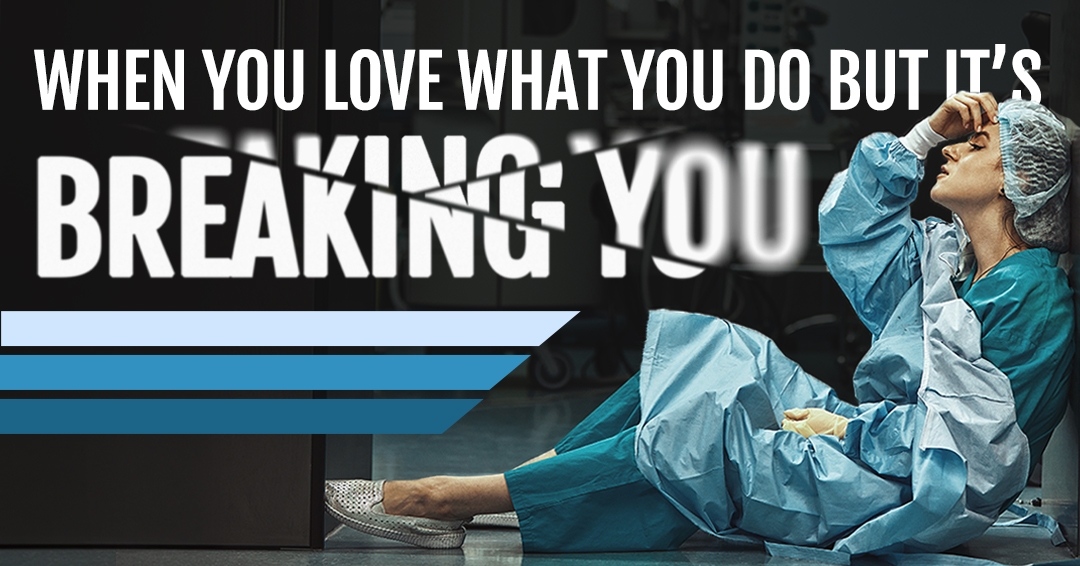
HEALTHCARE BURNOUT:
WHEN YOU LOVE WHAT YOU DO BUT IT’S BREAKING YOU
You didn’t choose an easy career. You chose one that matters.
You chose the early alarms, the 12-hour shifts, the moments where someone’s life is literally in your hands. You chose to show up — not because it’s comfortable, but because you care deeply about what you do.
And that’s the part no one warns you about.
Because healthcare burnout doesn’t always come from hating your job. The kind that breaks nurses, surgical assistants, and medical professionals the hardest is the kind that comes from loving the work so much that you forget to take care of yourself in the process.
What Healthcare Burnout Actually Looks Like
When most people picture burnout in healthcare workers, they imagine someone who can’t get out of bed. Someone calling in sick every week. Someone visibly falling apart.
But that’s not how it usually shows up.
You’re functioning. You’re performing. From the outside, you look like you have it together. You might even be the person everyone else leans on.
But inside, something has shifted.
The drive that used to fuel you now feels like a weight. The compassion that made you great at your job leaves you empty by the end of the shift. You go home, and instead of feeling proud of the lives you touched, you just feel… tired. A kind of tired that sleep doesn’t fix.
This is emotional exhaustion in healthcare — and it’s far more common than most people realize. Studies show that over 50% of nurses and frontline healthcare workers report symptoms of burnout, with surgical environments ranking among the highest-pressure settings in medicine.
The Signs of Burnout Most Healthcare Workers Miss
Nurse burnout and surgical burnout don’t announce themselves. They build quietly — one extra shift, one skipped meal, one more night where you tell yourself you’re fine when you’re not.
Here are the signs most healthcare professionals overlook:
Emotional numbness. You used to feel deeply about your patients. Now you catch yourself going through the motions. It’s not that you don’t care — it’s that your body is protecting you from caring too much.
Identity loss. You can’t remember the last time you did something for yourself that had nothing to do with work. Your entire identity has become your role.
Guilt for struggling. You feel like you shouldn’t be burned out because “other people have it worse” or because you chose this career. So you push it down and keep going.
Physical symptoms you explain away. Headaches, jaw clenching, back pain, disrupted sleep, getting sick more often. Your body is keeping score even when your mind won’t.
Dreading what you used to love. The shift hasn’t changed. The patients haven’t changed. But your relationship to the work has — and that scares you more than you want to admit.
If any of this sounds familiar, you’re not weak. You’re not failing. You’re experiencing what happens when someone gives everything they have without receiving support in return.
Why Healthcare Workers Burn Out Differently
Here’s what makes burnout in healthcare workers different from burnout in other fields: the stakes are real, the pressure is constant, and the emotional labor is invisible.
No one teaches you in nursing school how to protect your mental health during a 14-hour surgical day. No one hands you a playbook for processing the weight of what you witness — the emergencies, the losses, the moments that follow you home.
So you do what everyone around you does. You push through. And pushing through works — until it doesn’t.
The culture of healthcare often reinforces this cycle. Asking for help can feel like admitting you’re not cut out for the job. Taking a break can feel selfish when patients need you. And the system itself rarely makes space for healthcare worker mental health — even though the people inside it are the ones holding everything together.
What Burnout Recovery Actually Looks Like
Coming back from healthcare burnout isn’t about quitting your job or booking a vacation. It’s about small, intentional shifts that rebuild you from the inside:
Recognizing where you actually are. Not where you think you should be — where you are right now. Honest self-assessment is the first step. Most healthcare professionals are surprised by how far into burnout they’ve drifted without realizing it.
Learning to regulate in real time. Not just after the shift is over, but during it. Building skills in emotional regulation and nervous system awareness so you can protect your energy throughout the day, not just recover from losing it.
Rebuilding your identity outside of work. Reconnecting with the version of yourself that exists beyond the scrubs, beyond the role, beyond what everyone else needs from you. Movement, creativity, rest — whatever brings you back to who you are.
Finding community that gets it. Burnout thrives in isolation. Recovery accelerates when you’re surrounded by people who understand the weight without needing you to explain it.
It doesn’t happen overnight. But it starts with one honest moment — the moment you stop saying “I’m fine” and start saying “I need something different.”
You’re Not Alone in This
If anything in this post felt familiar, know this: you’re not broken. You’re not failing at a career you were meant for. You’re a woman who has given everything she has — and it’s time for someone to give something back to you.
That’s why Strength Appeal exists. Not to sell you a product — to remind you that resilience isn’t about how much you can take. It’s about knowing when to take care of yourself, too.
Ready to Check In With Yourself?
Take the free 60-second Burnout Self-Assessment. No judgment — just clarity on where you are and what your next step looks like.
Want to Go Deeper?
The Resilience Tree Program is a guided 7-step journey built specifically for women in high-pressure healthcare careers who are ready to move from survival to strength.
